
I used to think reading in bed was just something you did badly and dealt with. Prop a couple of pillows behind your back, slide down after ten minutes, end up flat with the book on your chest, and wake up the next morning with a stiff neck from sleeping in whatever position you drifted off in. I did that for years before I actually sat down and fixed how I read in bed, and the fix turned out to be less about the book and more about the setup around it.
The single biggest change was swapping our stack of regular pillows for a real armrest reading pillow, specifically the ComfortSpa reading pillow with arms we've had propped against our headboard for months now. The armrests alone fixed the shoulder ache I used to get from holding a book up all evening. But the pillow isn't the whole answer. Where you put it, where your lamp sits, how your knees are angled, all of that matters just as much. Below is the exact setup I use most nights, in order, so you can build it once and stop thinking about it.
Most back pain from reading in bed isn't from the book. It's from what's behind your back.
Before you change anything else, get a reading pillow with real armrests under you. It's the one piece of this setup that a stack of regular pillows genuinely cannot replace.
Amazon Check Today's Price on Amazon →Step 1: Square the pillow against your headboard, not your mattress
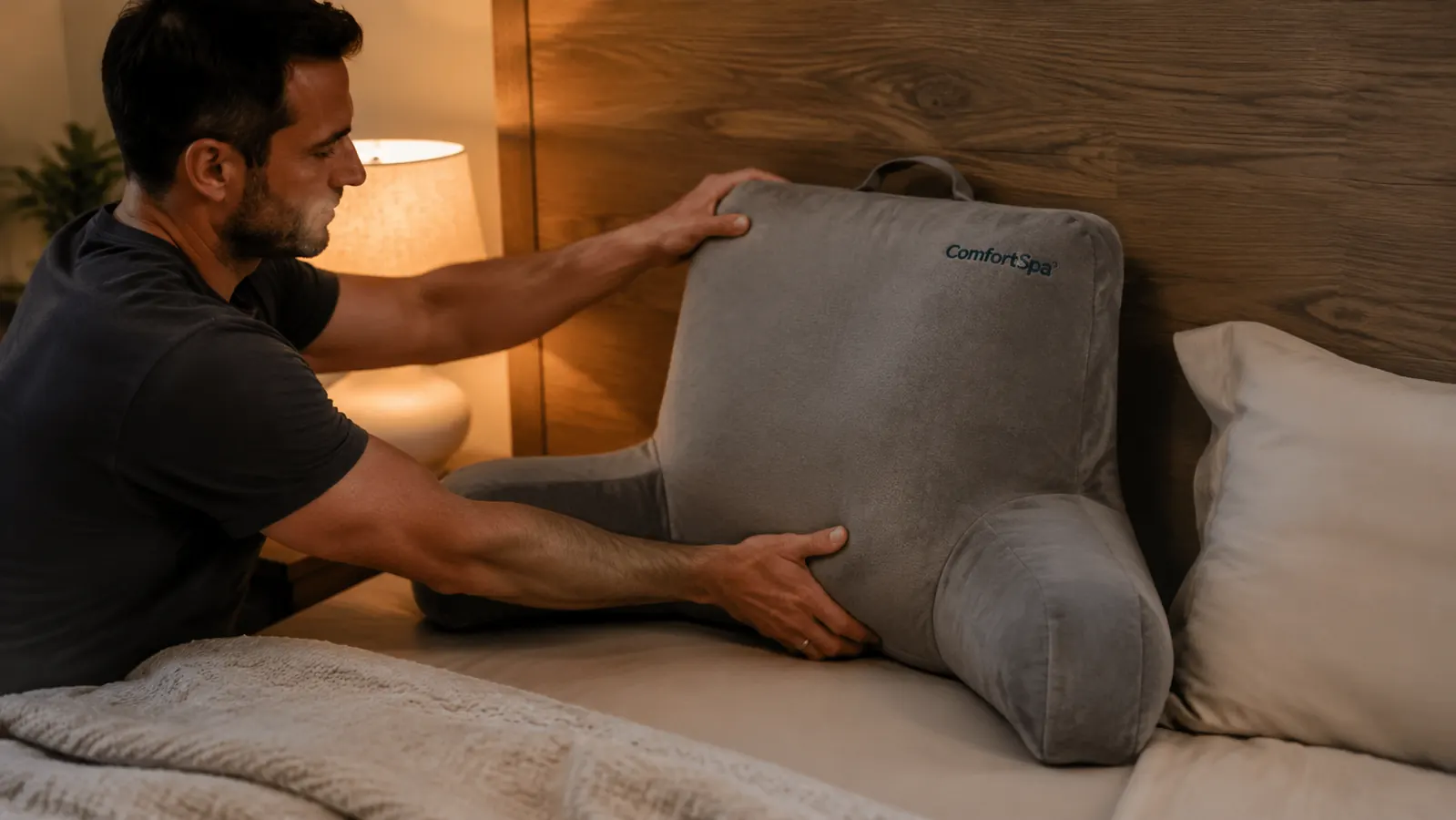
This sounds obvious until you actually watch someone do it wrong, which I did for years. Most people push a bed rest pillow up against the mattress edge where the headboard meets the bed, which leaves a gap behind your shoulders that the pillow can't fill. The base of the ComfortSpa needs to sit flush against the headboard itself, angled so the back panel is nearly vertical rather than reclined.
If you don't have a headboard, stack two firm regular pillows behind the reading pillow first to give it something solid to lean into. Without that backing, a bed rest pillow with arms will slowly slide down and forward every time you shift your weight, which defeats the entire point of buying one. I learned this the hard way in the first week before I started wedging a folded blanket behind ours on nights I moved it to the guest room for Casey's mom.
Take the extra thirty seconds here. A pillow squared up correctly against a solid surface will hold its position through a full twenty or thirty minute reading session. One that's just resting loosely against soft bedding will need re-adjusting three or four times before you finish a chapter, and you'll end up blaming the pillow when the problem was actually the setup.
It's worth checking this placement again every week or two, especially if more than one person in the house uses the same bed rest pillow. Jonah has pulled ours forward more than once trying to build a fort out of it on a Saturday morning, and it's an easy thing to forget to square back up before Sunday night rolls around and you're too tired to notice it's sitting crooked.
Step 2: Get your hips back before you get comfortable
The next mistake I made for years was sitting too far forward on the mattress, then leaning back into the pillow from an angle instead of sitting fully upright against it. Your hips need to be as close to the base of the pillow as you can get them, basically sitting in the same spot you would if this were a chair with a back on it. If there's a gap between your lower back and the pillow, you'll feel it in your spine within ten minutes.
Once your hips are back, let your shoulders and upper back settle into the vertical panel and check that your head isn't jutting forward to see the page. A small flat pillow behind your neck, separate from the reading pillow, fixes this for most people. I keep one folded pillow just for that purpose, since the ComfortSpa's main panel is built for your back and shoulders, not specifically your neck.
This is also the point where the armrests start doing their job. Rest your forearms directly on the padded arms rather than holding them up in the air to support your book. That's the single biggest difference between an armrest reading pillow and a plain wedge, and it's the part that saved my shoulders after years of holding books and tablets up unsupported every night.
If your arms still feel like they're reaching down toward the page even with your forearms resting properly, try shifting your whole body up an inch or two on the seat of the pillow before settling in. A small change in seated height changes the angle of your forearms on the arms more than you'd expect, and it usually solves the reaching feeling without needing to prop the book up on anything extra.
Step 3: Position your light before you open the book
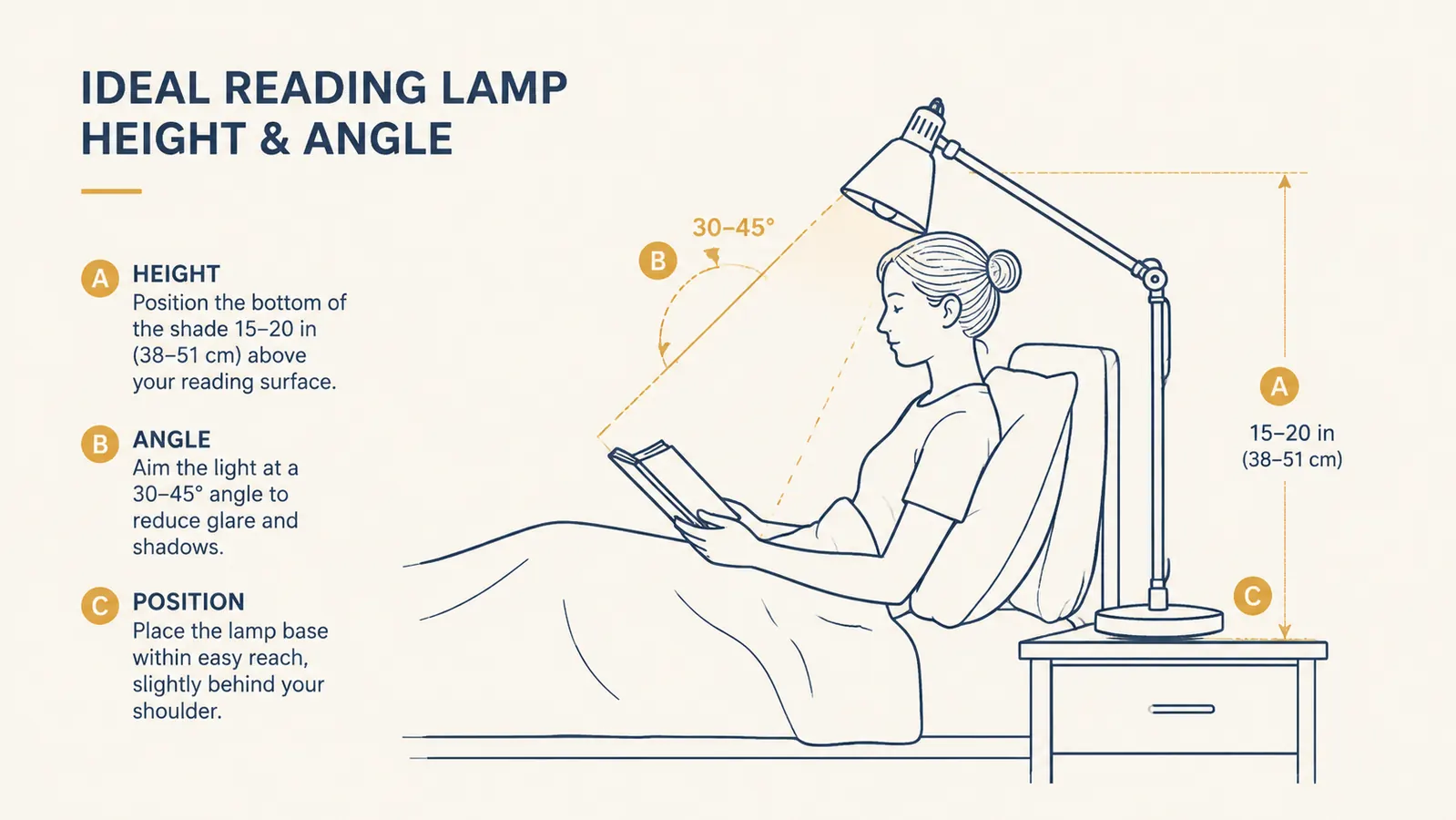
I used to just grab whatever lamp was on the nightstand and call it good enough, which usually meant the light came from too low an angle and cast a shadow right across the page. The fix is simple once you know it. Your light source needs to sit above and slightly behind your shoulder on the side you're holding the book, angled down onto the page rather than across it.
A clip-on book light attached to the pillow's pocket or the headboard works better than a nightstand lamp for most people, because it moves with you instead of staying fixed in one spot while you shift positions. If you're using a nightstand lamp, raise it if you can, even something as simple as a small stack of books under the base, so the light comes down at more of an angle instead of straight across.
Dim, warm light matters here too, not just placement. A bright white bulb right before bed works against the whole point of winding down with a book. I switched our bedside lamp to a warm, low bulb a while back and it made a noticeable difference in how quickly I actually got sleepy after twenty minutes of reading, instead of feeling more alert than when I started.
One more thing worth checking is glare off the page itself, especially with glossy paperback covers or a tablet screen. Tilting the book slightly away from the light source, rather than straight up and down, usually clears it up in a second without needing to move the lamp at all. It's a small habit, but I catch myself doing it automatically now without thinking about it.

Step 4: Give your knees somewhere to go
This step gets skipped constantly and it's a big part of why people end up sliding down flat after ten minutes. If your legs are stretched out straight while you're sitting upright against a reading pillow, your body naturally wants to slide down toward flat, because straight legs pull your hips forward off the pillow over time.
Bend your knees slightly and prop them on a small pillow or a rolled blanket. That small bend takes the pull off your hips and lets you stay upright against the reading pillow far longer without constantly readjusting. I keep a small throw pillow at the foot of the bed just for this, and it's genuinely made the difference between reading for ten minutes before sliding down and reading for a full chapter without moving.
If you've got a dog like Biscuit who likes to flop across your legs the second you get settled, this step gets a little harder, but a firm small pillow under your knees still holds its position better than trying to balance around sixty pounds of sleeping dog with nothing supporting your legs at all.
This also matters if you're reading with a laptop or tablet balanced on your legs rather than a paperback in your hands. A flatter, more stable lap surface from bent knees keeps the device from sliding toward your stomach every time you shift, which is its own small annoyance that adds up over a longer session.
Step 5: Set a stopping point before you start
The last piece isn't physical, it's a habit, but it matters just as much as the pillow itself. Decide roughly how long you're reading before you open the book, whether that's one chapter, twenty minutes, or until a specific time on the clock. Reading in bed without any endpoint is how you end up finally putting the book down at midnight with the light still glaring and your body wound up instead of winding down.
In our house that's usually story time with Emma and Jonah first, one chapter each, lights basically out by 8:15 on school nights. Then I get my own twenty minutes or so before Casey and I turn in. Having that rough boundary means the reading pillow gets used the same way most nights, which is honestly part of why it's held up so well. Consistent, moderate use instead of occasional marathon sessions that push everything past the point where good posture even matters anymore.
A rough stopping point also keeps you from talking yourself into finishing just one more chapter after your neck has already started to ache. That's usually the sign your posture broke down somewhere in the last ten minutes, and pushing through it instead of resetting is how a good reading session turns into a bad night's sleep.
What Else Helps
A couple of small things outside the five steps make a real difference too. Keeping a glass of water and your glasses on the nightstand instead of digging around for them mid-chapter cuts down on the shifting and twisting that undoes good posture. If you wear reading glasses, a slightly stronger pair specifically for evening reading in dim light can also reduce the urge to lean forward toward the page, which is its own small posture killer over a few months of nightly use.
It also helps to actually check the pillow's cover for washing every so often, especially if snacks or drinks make it into bed the way they do in our house. A washable cover means you're not tempted to just live with crumbs or a spill instead of tossing it in the machine, which matters if you want this to still feel like a nice place to sit down six months from now instead of something you're avoiding.
If you share the bed with a partner, it's worth talking through where each of you sits before you're both trying to read at the same time. Casey and I worked out that she takes the side closer to the lamp and I take the outside, mostly because the armrests stick out wide enough that elbows bump if we're not paying attention. A five minute conversation about seating saved us a lot of small nightly friction.
The pillow does the work your headboard never could. Everything else on this list just makes sure you actually stay in the position it's built for.
Set this up once and you stop thinking about it every night.
A reading pillow with real armrests is the one part of this setup you genuinely can't replace with pillows you already own. Everything else is free. This is the piece worth getting right.
Amazon Check Today's Price on Amazon →