I used to close my laptop at 9:30, brush my teeth, get into bed, and then lie there wide awake until almost 11, staring at the ceiling fan while my brain refused to power down. Casey noticed it before I did. She'd roll over and ask why I was still awake, and I never had a real answer beyond "I don't know, I just feel wired." A friend at work mentioned he'd started wearing red-lens glasses in the evening to block blue and green light, and I ordered a pair of TIJN sleep glasses that same week mostly out of skepticism, expecting to feel silly and get nothing out of it.
I want to be honest about what these actually are before I go further. TIJN's sleep glasses aren't a medical device and they don't claim to cure insomnia. They're a pair of glasses with a deep red or amber-red lens designed to filter out blue and green wavelengths of light, the kind that phone screens, TVs, and overhead LEDs pump out well past sunset. The theory is that less blue and green light in the evening means your body keeps producing melatonin on a more normal schedule instead of getting told by your screens that it's still noon. That's the premise I tested, nothing more dramatic than that.
The Quick Verdict
Not a sleep miracle, but a cheap, comfortable pair of glasses that measurably shortened how long it took me to fall asleep once I actually wore them every single evening.
Amazon Check Today's Price →I stopped staring at the ceiling fan at 11pm within about two weeks of putting these on.
If your brain won't power down after a full evening of screens, TIJN's red-lens glasses are the cheapest, lowest-effort thing I tried before anything more involved.
Amazon Check Today's Price on Amazon →How I've Used It
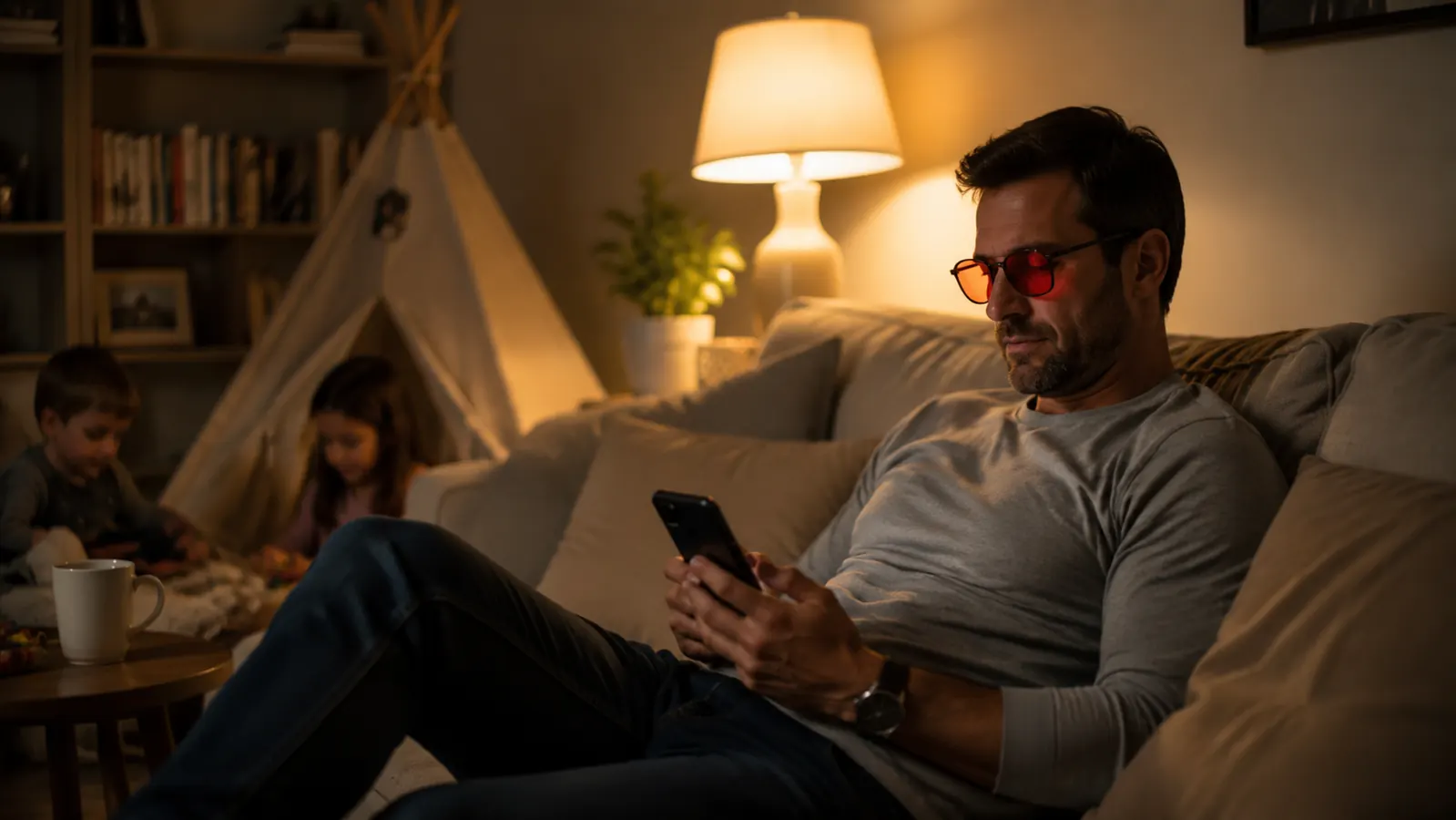
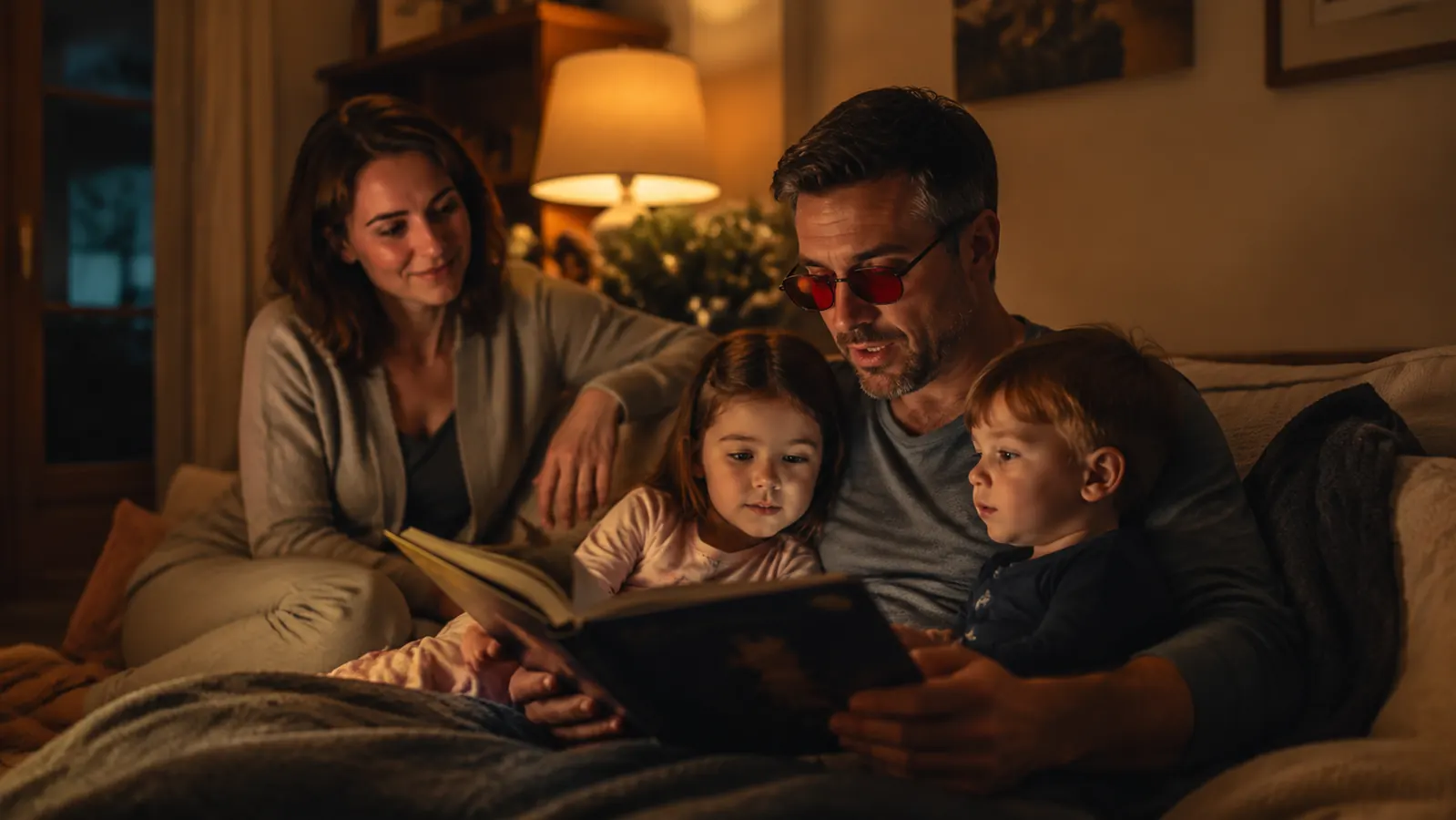
My routine is dead simple, which is honestly why I stuck with it. Around two hours before I actually want to be asleep, so usually 8:30 for me, I put the glasses on and I don't take them off until I turn out the lamp. I wear them while I help with the kids' bedtime routine, while I watch whatever Casey and I are catching up on, and while I scroll my phone in bed for those last ten minutes before sleep. Emma, our six-year-old, calls them my "vampire glasses" because of the red tint, and Jonah, who's three, just wants to try them on himself every single night, which means I've had to buy him a cheap kid-sized pair of his own just to keep the peace.
I didn't ease into this gradually. I wore them every evening starting the first week because I wanted a real two-month test, not a cherry-picked handful of good nights. I kept a note on my phone each night logging roughly how many minutes it took me to fall asleep after getting into bed, based on when I remember checking the clock versus when I actually woke up the next time. It's not a lab study, it's one dad's nightstand notes, but it's honest data collected the same way every single night.
Biscuit, our dog, has her bed at the foot of ours, and she used to get restless around the same time I did, pacing and resettling while I tossed around trying to fall asleep. About three weeks in, I noticed she was settling down and staying down faster too, which sounds like a stretch, but I think she was just picking up on the fact that I wasn't lying there restless and shifting the mattress every few minutes anymore.
What's Actually in the Lenses
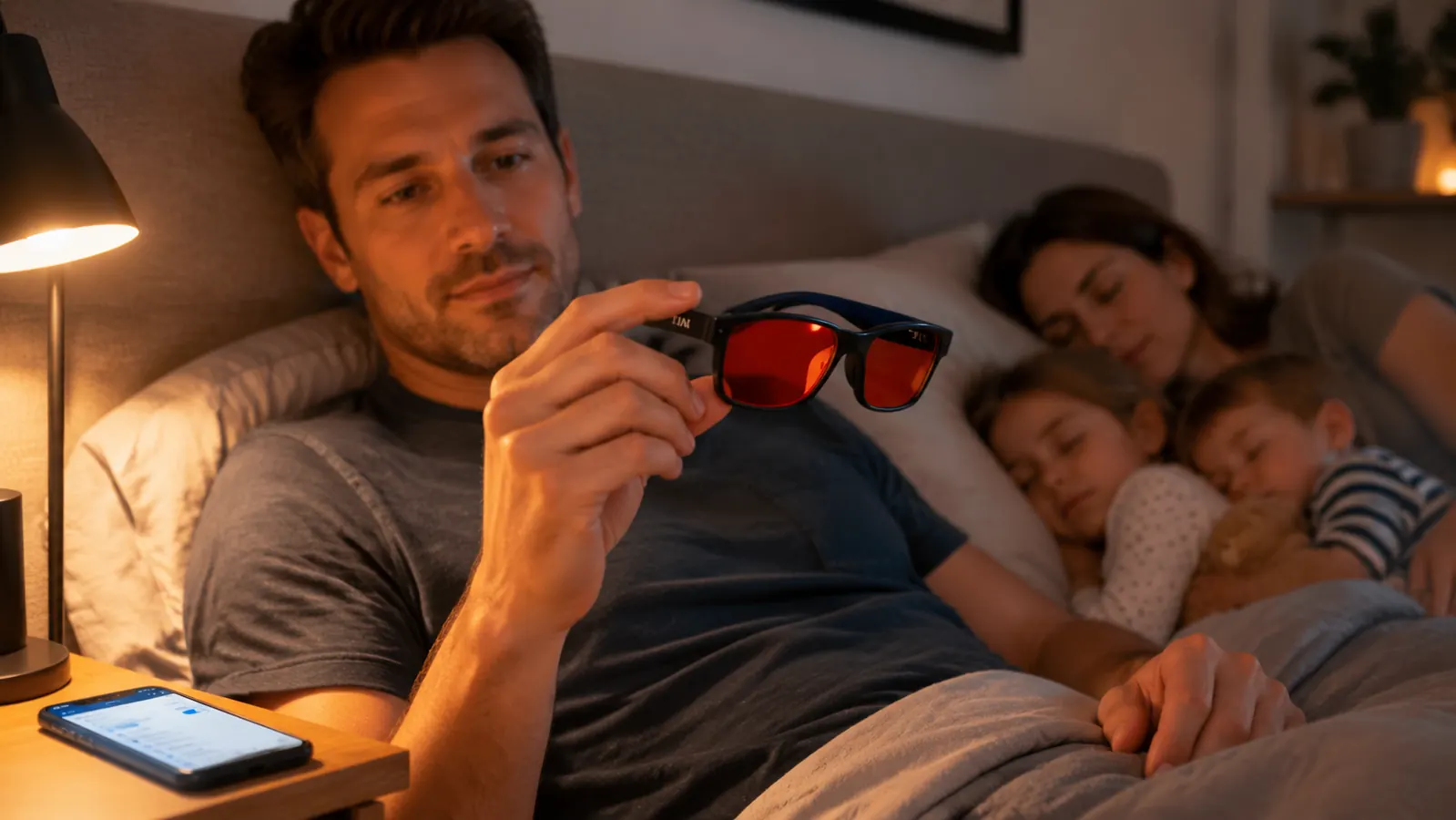
TIJN's sleep glasses use a deep red lens that blocks a significant chunk of blue and green light while letting the warmer wavelengths through, which is why everything looks like it's lit by a campfire the moment you put them on. The frames themselves are lightweight plastic, nothing fancy, but they sat comfortably on my face through two straight hours of wear most nights without pinching behind my ears or leaving a mark on the bridge of my nose. I have a slightly narrow face and I was bracing for them to slide down while I read on the couch, and they never did.
They also advertise UV protection, which matters less for evening indoor use but is a nice bonus if you ever wear them outside during the day, which I did a handful of times when I forgot to swap them out before running an errand and got some funny looks in the grocery store parking lot. The red tint is strong enough that reading text on my phone screen takes a few seconds of adjustment each time I put them on, everything looks slightly rosy and dim at first, but my eyes adapted within about a minute every single evening.
One thing I noticed by week four was that the lenses do pick up small scratches if you toss them in a bag without a case, which mine came with but which I ignored for the first two weeks out of laziness. Once I started actually using the case, the lenses stayed clear. Worth mentioning since it's an easy mistake to make with something this cheap and easy to underestimate.
Eight Weeks of Evening Data
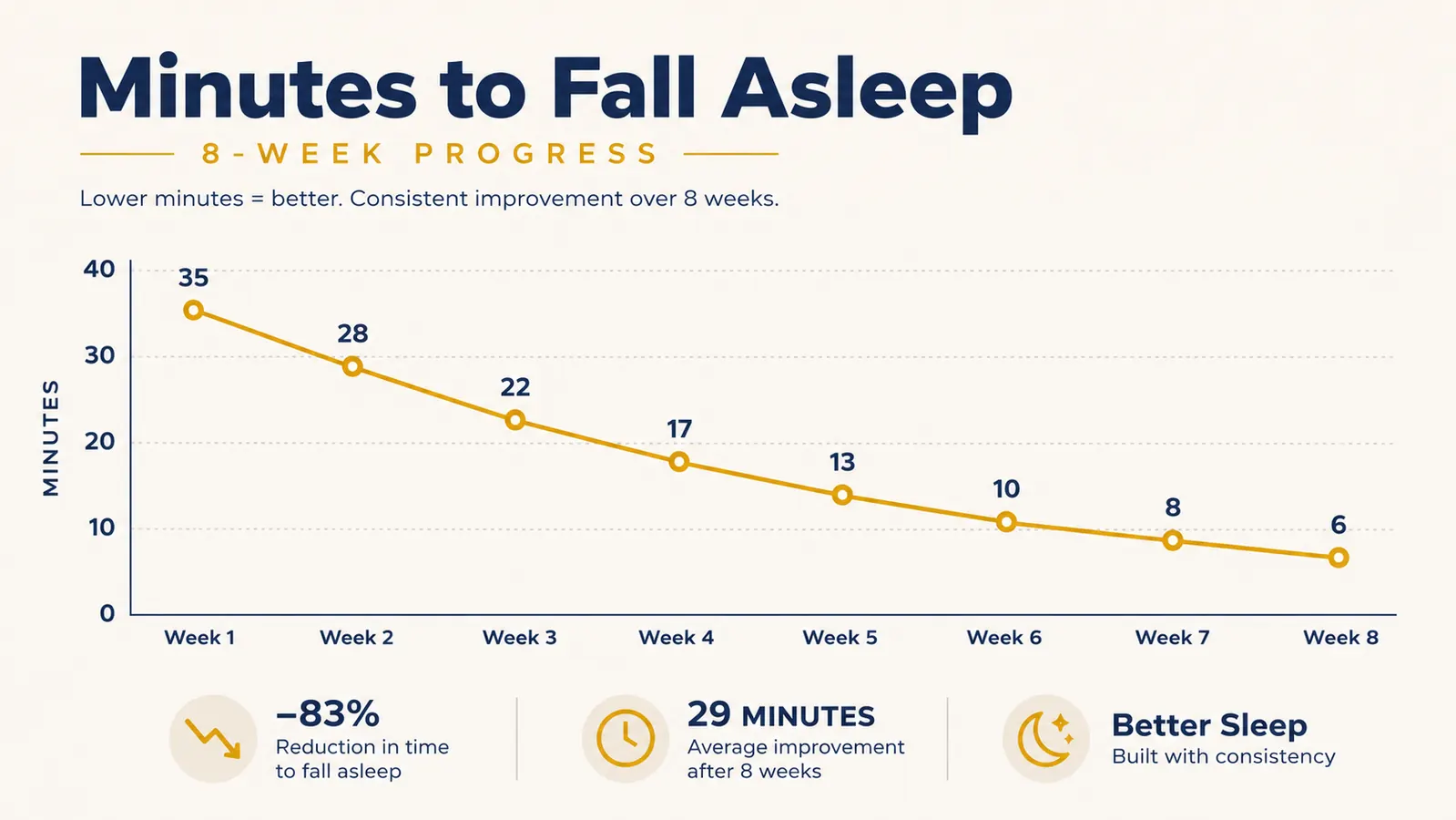
Week one felt more like a novelty than an actual sleep aid. I was too busy noticing how strange the red tint made the TV look to pay attention to whether I was actually falling asleep faster. My own notes from those first seven nights show an average of about 34 minutes to fall asleep after getting into bed, which was roughly in line with what I remembered before starting this test.
By week three, that average had dropped to about 22 minutes, and by week six it settled around 15 minutes, where it's basically stayed through the rest of the two months. That's not a dramatic transformation, but going from lying awake for half an hour most nights to drifting off in roughly the time it takes to finish one podcast segment felt like a real, livable change, not a placebo I talked myself into.
The bigger shift, honestly, was less about the minutes and more about how my evenings felt overall. Casey noticed I stopped picking fights about nothing around 9:30, which had genuinely become a pattern before this, some low-grade irritability that showed up right around the time I should have been winding down instead of scrolling with the lights blazing. I'm not going to claim the glasses fixed my temperament, but something about not staring at a bright blue-white screen for two hours straight before bed took an edge off that used to be there most nights.
Casey ran her own quiet test around week five, borrowing my pair for a stretch of nights when her own sleep had gotten rocky from a stressful week at the kids' school. She came back after four nights and admitted, unprompted, that she'd fallen asleep faster than she expected to given how wound up she'd been. That kind of independent confirmation from someone who wasn't tracking anything on purpose meant more to me than any number in my own notes.
The Tradeoffs Nobody Puts in the Marketing
The obvious tradeoff is that everything turns some shade of red or amber the entire time you're wearing them, which means these are genuinely not the pair you want on if you're trying to read fine print, check a recipe, or do anything that needs true color accuracy. I learned this the hard way trying to help Emma with a coloring page one evening and completely misjudging which crayon was which.
There's also a real adjustment period if you're someone who's never worn tinted glasses indoors before. The first several nights I felt a little disoriented walking from a brightly lit kitchen into the dimmer living room while wearing them, and I bumped my hip into the corner of the counter once in a way that made Casey laugh at me for a solid week afterward. That faded completely by around night ten, but it's worth knowing going in rather than being caught off guard.
The other honest limitation is that these only address the light side of the sleep equation. If your actual problem is a racing mind about work deadlines, or a mattress that's seen better days, or a bedroom that's too warm, the glasses aren't going to touch any of that. They did their one specific job well for me, but I'd be overselling it if I said they solved sleep as a whole.
I also found the arms run slightly wide for smaller heads, which is why the kid-sized pair I bought for Jonah was a completely separate purchase rather than something I could just adjust down from mine. If you're buying for a partner with a narrower face, it's worth checking the sizing details rather than assuming one pair fits everyone in the house.
Other Options I Considered First
Before landing on TIJN I looked seriously at the bigger name-brand computer glasses that show up first in every search, the kind marketed more toward gamers and programmers than toward sleep specifically. They're well made and often built with sturdier frames, but they're priced well above what I wanted to spend on something I wasn't sure I'd actually stick with past the first week. I wrote a full side-by-side breakdown of TIJN against one of those bigger brands, because the lens tint, price, and actual bedtime use case differ more than the marketing photos let on.
I also considered just using a blue-light filter app on my phone and TV instead of glasses at all. I tried that route for about a week before switching to TIJN, and it helped a little with the phone screen but did nothing for the overhead LED lights in our living room or the TV itself, which don't have a built-in filter option. Wearing the glasses covered every light source in the room at once, which the software-only approach never did for me.
Doing the math after two months made this an easy decision in hindsight. A single pair of TIJN glasses costs less than a lot of families spend on a single takeout dinner, and mine have held up through nightly use, two curious kids trying them on, and one accidental sit-on-them incident that I was sure had cracked a lens but somehow didn't. For something I wasn't confident I'd keep wearing past the first two weeks, starting with the cheaper option felt like the smart bet, and it's the one that stuck.
What I Liked
- Noticeably shortened how long it took me to fall asleep once I wore them consistently, not just occasionally
- Comfortable frame that didn't pinch or slide during two straight hours of evening wear
- Covers every light source in the room at once, unlike a phone-only blue light filter
- Very low cost for something I now consider part of my nightly routine
- Held up through nightly use plus two young kids constantly wanting to try them on
Where It Falls Short
- Everything looks red or amber the entire time you're wearing them, so no good for reading fine print or matching colors
- Short adjustment period walking between rooms with different lighting the first week or two
- Only addresses the light side of sleep, does nothing for a racing mind or an uncomfortable mattress
- Arms run slightly wide for smaller heads or kids, needed a separate kid-sized pair
Casey noticed I stopped picking fights about nothing around 9:30 before I ever mentioned a single number from my sleep notes. She saw the change before I could prove it.
Who This Is For
These make the most sense for someone who's already staring at screens most evenings, whether that's work email, a show with your family, or scrolling in bed, and who suspects that light exposure is part of why bedtime takes so long to arrive. If you want a cheap, low-effort way to test the blue light theory before spending more on something fancier, this is a reasonable place to start. It's also a good fit if you're the type who'll actually commit to wearing something every single evening rather than only on nights you remember, because the improvement here showed up gradually, not overnight.
Who Should Skip It
Skip this if your evenings involve tasks that need accurate color vision, like grading papers with color-coded pens or matching paint swatches, since the red tint makes that genuinely impractical. It's also probably not worth it if your sleep trouble has more to do with stress, an uncomfortable bed, or a medical condition you haven't discussed with a doctor, since glasses alone won't touch any of that. And if you share a house with curious little kids like I do, budget for a second pair pretty quickly, because mine did not stay exclusively mine for long.
Two months in, I fall asleep in about the time it takes to finish one podcast segment.
That's the entire pitch. It's not glamorous, it's just a cheap pair of red-lens glasses that quietly did their one job every single evening.
Amazon Check Today's Price on Amazon →